Wear & Replacement
When a chain, cassette or tire is done — measured, not guessed.
Drivetrain wear runs in one direction, and knowing the order turns a guess into a schedule.
The cascade
The chain wears first. As its pitch stretches, it stops sitting in the cog valleys and starts riding up the tooth faces, cutting each cog into a hook shape that matches the worn chain. Fit a new chain to hooked cogs and it skips under load — the cassette has been machined to fit a chain that no longer exists.
Chainrings go last, because they see the load spread over far more teeth.
chain → cassette → chainrings
~2,000 mi   ~3 chains   ~5 chains
Replace the chain on time and a cassette lasts three chains. Run one chain to destruction and you buy chain, cassette and often the small ring together.
The threshold moved, and it moved because cogs got thinner
| Speeds | Replace at |
|---|---|
| 8–10 | 0.75% |
| 11–12 | 0.5% |
Narrower cogs have less material to give up before the tooth profile is gone, so the same absolute stretch does more damage. Using the old 0.75% figure on an 11-speed cassette is the most common way to destroy one.
Why your gauge reads worse than a ruler
A drop-in chain checker rests one leg against a roller and levers off it. Roller wear — which is not pitch elongation — adds to the reading, so a typical two-legged gauge reports roughly 0.1–0.2% more wear than the pin-to-pin measurement that actually defines the standard.
That is not a broken tool. It is a conservative one, and knowing the offset is the difference between replacing at 0.5% and replacing at 0.35%.
The pages below take one component at a time, with the measurement that settles it.
7 articles
 Disc Pads and Rotors — The Numbers That Say Replace
A pad worn to the backing plate gouges the rotor in one descent, and a rotor is several times the price of a set of pads.
 Hub Bearings — Play, Drag, and the Difference Between Them
Two seconds with the wheel in the frame tells you whether a hub needs attention. Most people never do it, and hubs fail quietly.
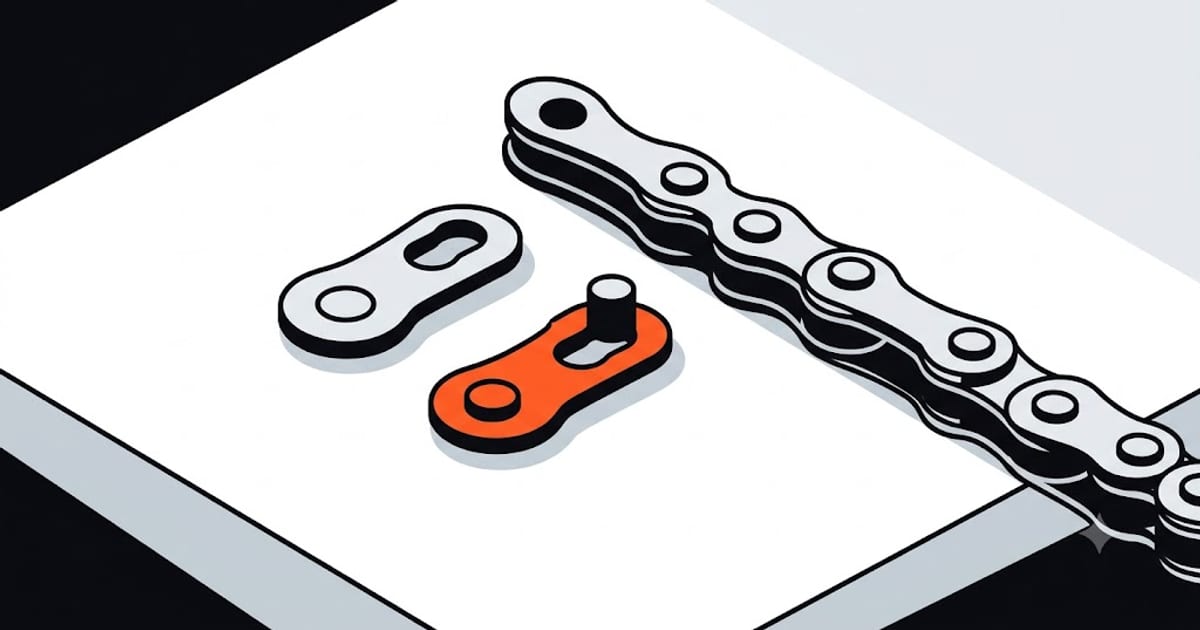 Quick Link or Connecting Pin? And Which Quick Links Are Actually Reusable
Manufacturers rate most 11 and 12-speed quick links single-use, and plenty of people reuse them anyway. Here is what the rating is actually about.
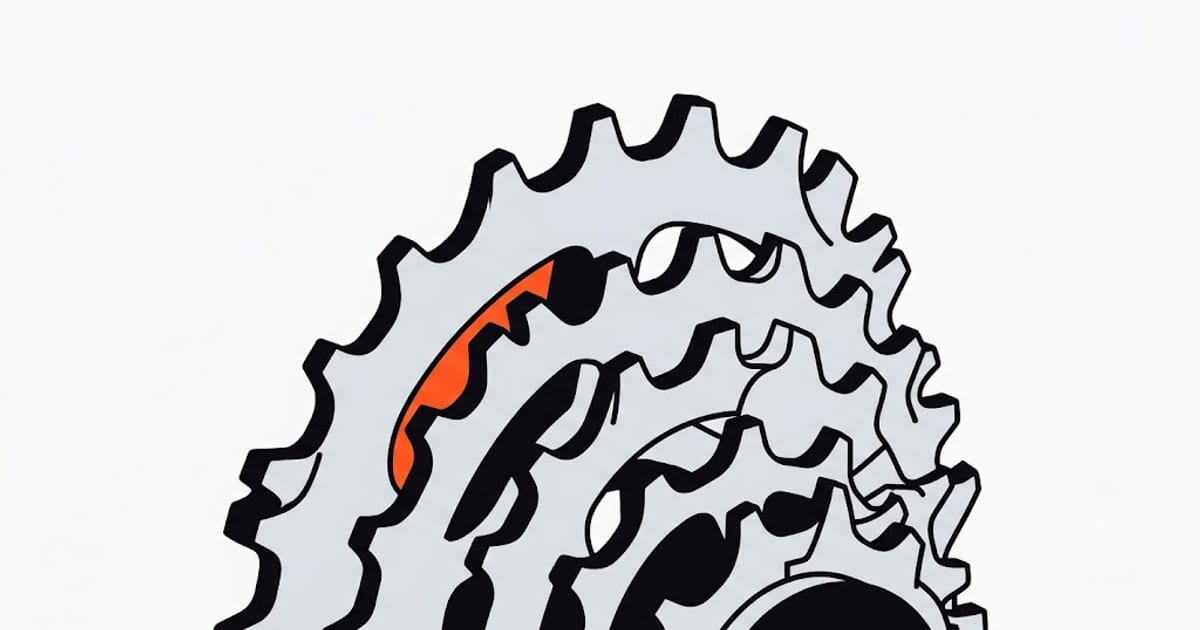 When to Replace a Cassette: When the New Chain Skips
There is no ruler for a cassette. The test is a new chain under load, and the answer arrives within one hard pedal stroke.
 Wet, Dry or Wax Chain Lube? Conditions Choose, and Application Matters More
Which lubricant you buy matters less than whether the chain was clean when you applied it and whether you wiped the outside afterwards.
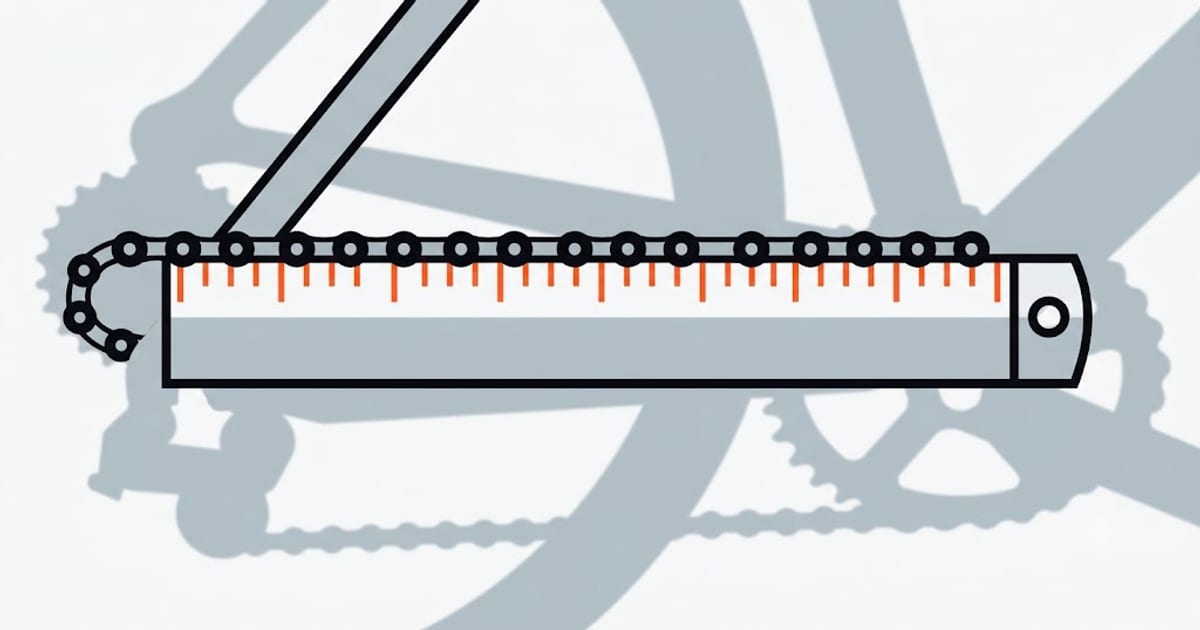 Measuring Chain Wear: The Ruler Method, and Why Your Gauge Reads Worse
Two tools give two different answers on the same chain. Neither is broken — they measure different things, and only one matches the published thresholds.
 When to Replace a Bike Chain: 0.5% for 11-Speed, 0.75% for Everything Older
A chain is the cheapest part of a drivetrain and the one that destroys the expensive parts when left too long. The measurement takes a minute and the threshold depends on how many sprockets you have.