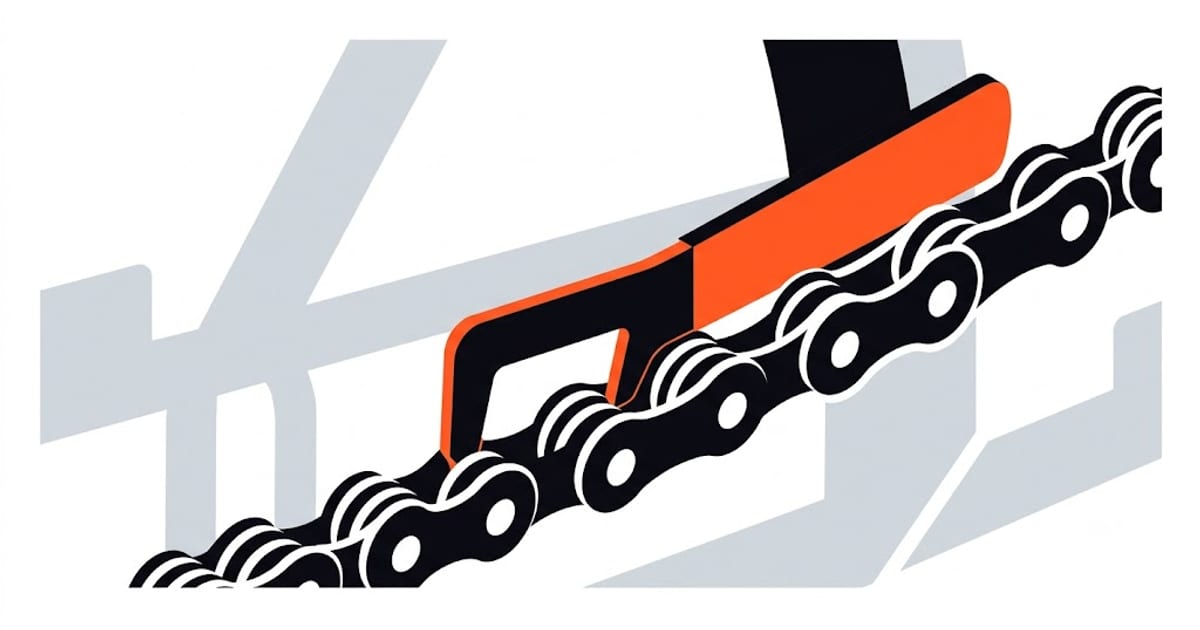
Chains do not stretch. The steel does not lengthen — the rollers and pins wear, and the accumulated slop between them makes the chain longer overall. The effect is the same and the industry calls it stretch, but the distinction matters for understanding why a worn chain damages everything it touches.
A longer chain no longer sits with its rollers centered in the sprocket teeth. Each roller lands slightly off, and the tooth wears into a new shape that matches the worn chain. Do this long enough and the sprocket only accepts a worn chain — which is why fitting a new chain to a badly worn cassette produces skipping under load.
The two thresholds
| Drivetrain | Replace at |
|---|---|
| 11 and 12-speed | 0.5% elongation |
| 10-speed and fewer | 0.75% elongation |
More sprockets means thinner sprockets, and thinner teeth tolerate less mismatch before they are damaged. That is the whole reason the modern threshold is tighter.
Measuring with a ruler
A new chain has exactly one inch between rivet centers, so twelve links measure twelve inches.
Lay a steel ruler along the chain, zero on the center of one rivet, and read at the twelfth:
- 12 inches exactly — new.
- 12 1/16 inches — 0.5% worn. Replace now on 11 or 12-speed.
- 12 1/8 inches — 0.75% worn. Replace now on anything.
- Beyond that — the cassette is probably going too.
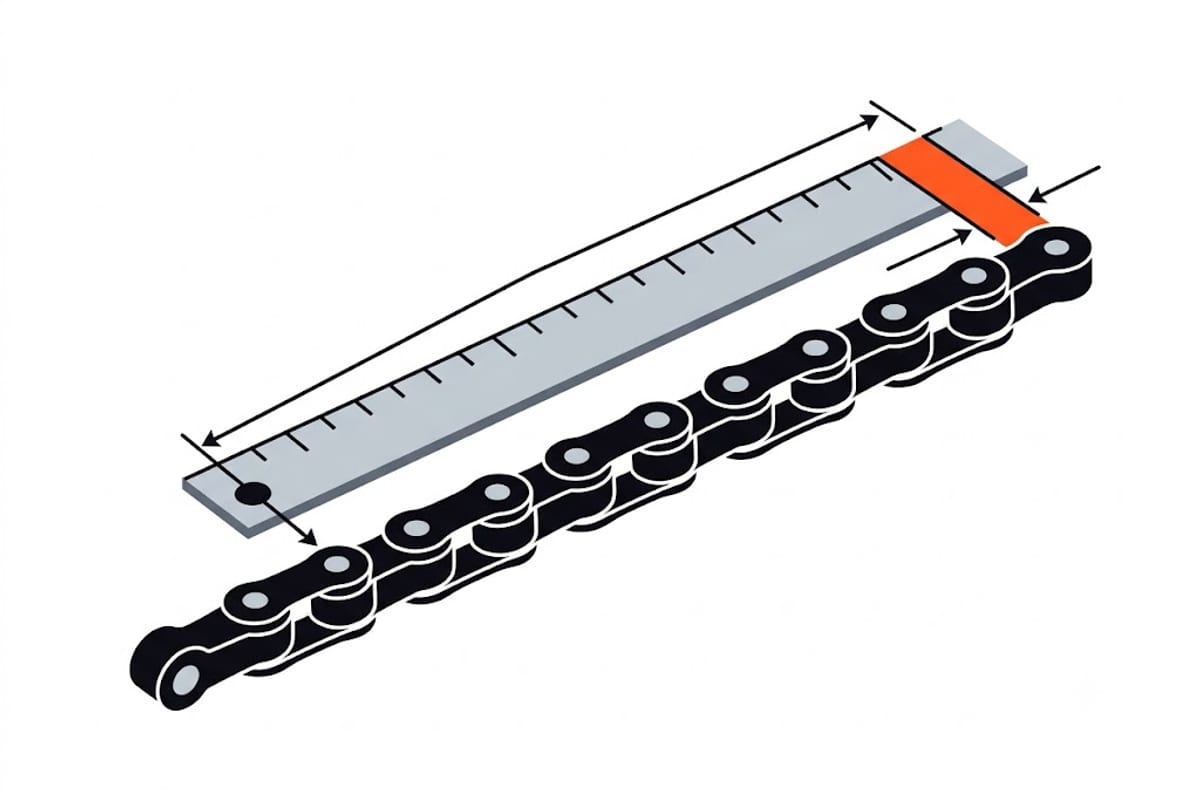
Measure on the top run with some tension on it, and check in two or three places along the chain — wear is not perfectly even.
Why gauges disagree with rulers
The common drop-in wear gauges measure into the gap between rollers, which means they include roller wear as well as pin wear. A ruler measures only pitch. The gauge therefore tends to read pessimistic — it can indicate 0.75% on a chain a ruler calls 0.5%.
Neither is wrong; they are measuring slightly different things. Better gauges use a single-ended design that isolates pitch and agrees more closely with a ruler. If your gauge says replace and your ruler disagrees, the ruler is measuring the thing the thresholds were defined against.
What it costs to wait
This is the entire argument for measuring:
- A chain is the cheapest wearing part of the drivetrain.
- A cassette costs several times that.
- Chainrings cost more again, and on a modern 1× setup can approach the price of a cassette.
Replace chains on time and one cassette typically outlasts two or three of them. Run a chain to the point of skipping and you replace all three at once — having saved nothing, because the chain still needed replacing.
How long a chain lasts
There is no useful universal number. Reported chain life ranges from under 1,500 km to well over 5,000, and the spread is dominated by conditions rather than by the chain:
- Riding in grit and wet is the largest single factor. Abrasive slurry in the rollers is what actually wears them.
- Cleaning and lubrication matter more than the brand of lubricant.
- Cross-chaining and high torque at low cadence accelerate wear.
Because the range is that wide, mileage is a reminder to measure rather than a replacement for measuring. Check every few hundred kilometers and the question answers itself.
FAQ
How do I check bike chain wear without a tool?
A steel ruler. Twelve links measure twelve inches when new; replace at 12 1/16 inches for 11 and 12-speed, or 12 1/8 inches for 10-speed and older.
Do I need to replace the cassette with the chain?
Not if the chain was replaced on time. A cassette usually lasts two or three chains. If a new chain skips under load on the old cassette, the cassette is worn and both need doing.
How often should I check?
Every few hundred kilometers, and more often in wet or gritty conditions. Chain life varies too much for a mileage rule to be reliable.
Why does my new chain skip?
Because the cassette wore to match the old chain. The teeth have reshaped and no longer accept correct one-inch pitch. The cassette needs replacing.
Does a more expensive chain last longer?
Marginally, and less than conditions do. Cleaning and lubrication have a larger effect on chain life than the price of the chain.