Tire Pressure
Pressure by rider weight, tire width and surface — not by the number on the sidewall.
The number molded into a bicycle tire sidewall is a maximum, not a recommendation. Riding at it is the most common reason a good bike feels harsh.
The figure that matters is tire drop — how far the tire compresses under load. About 15% is the target, and it comes from Frank Berto's testing, published through Jan Heine in Bicycle Quarterly. It balances rolling resistance, grip and comfort better than any single pressure ever could.
Pressure scales with load and collapses with width
A 25 mm tire under a given load wants roughly three times the pressure of a 47 mm tire carrying the same weight. Which is why fitting wider tires and keeping the old pressure makes a bike feel worse rather than better — and why so many people conclude wide tires are slow after trying exactly that.
Higher is not faster, and this took decades to accept
Above a certain pressure, rolling resistance on real road surfaces goes back up. The tire stops absorbing small irregularities and starts lifting the whole bike and rider over them instead, and that energy comes from your legs.
Smooth steel drums in a laboratory say otherwise. Roads are not smooth steel drums.
Front and rear are different
Weight distribution on a road bike runs roughly 40/60 front to rear. Running identical pressure at both ends means one of them is wrong; the rear wants about 10% more.
Where the model here stops
The curve is calibrated in the 23–45 mm range where the underlying data lives. It drifts at mountain-bike widths, where casing construction and rim width matter more than width alone captures. Treat any calculated figure as a starting point and adjust by feel over a few rides — tire pressure is one of the few settings where your own judgement genuinely beats a number.
6 articles
 Rim Width Changes Your Tire Pressure — the Tire Is Wider Than the Label Says
A 25 mm tire on a modern wide rim measures 27 or 28. Every pressure chart you look up was written for the number on the sidewall, not the one on your bike.
 Gravel Tire Pressure by Rider Weight — and Why to Run Below the Chart
The 15% tire drop target was measured on tarmac. On gravel the fastest pressure is lower than it predicts, and the reason is not comfort.
 MTB Tire Pressure for Trail Riding: Where the Charts Run Out
At 2.4 inches the road pressure formula returns 17 psi. That number is not wrong, but it is no longer the number that matters.
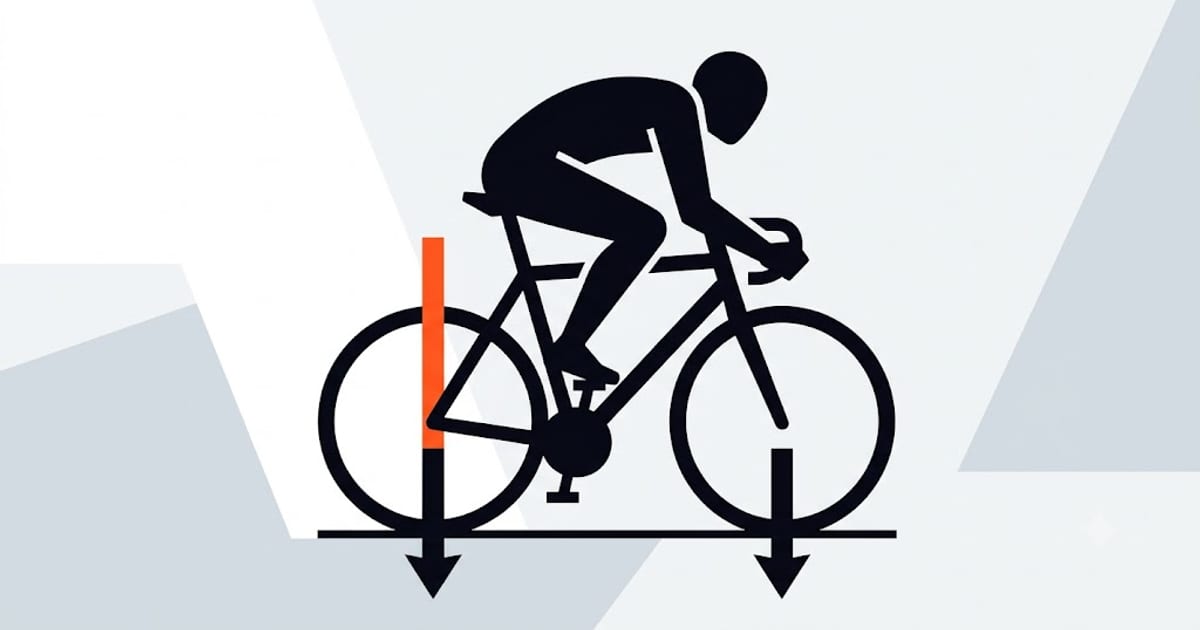 Road Bike Tire Pressure Chart by Total Weight (Front and Rear)
Most charts give you one number for both tires. Your wheels do not carry equal weight, so one number cannot be right for both.
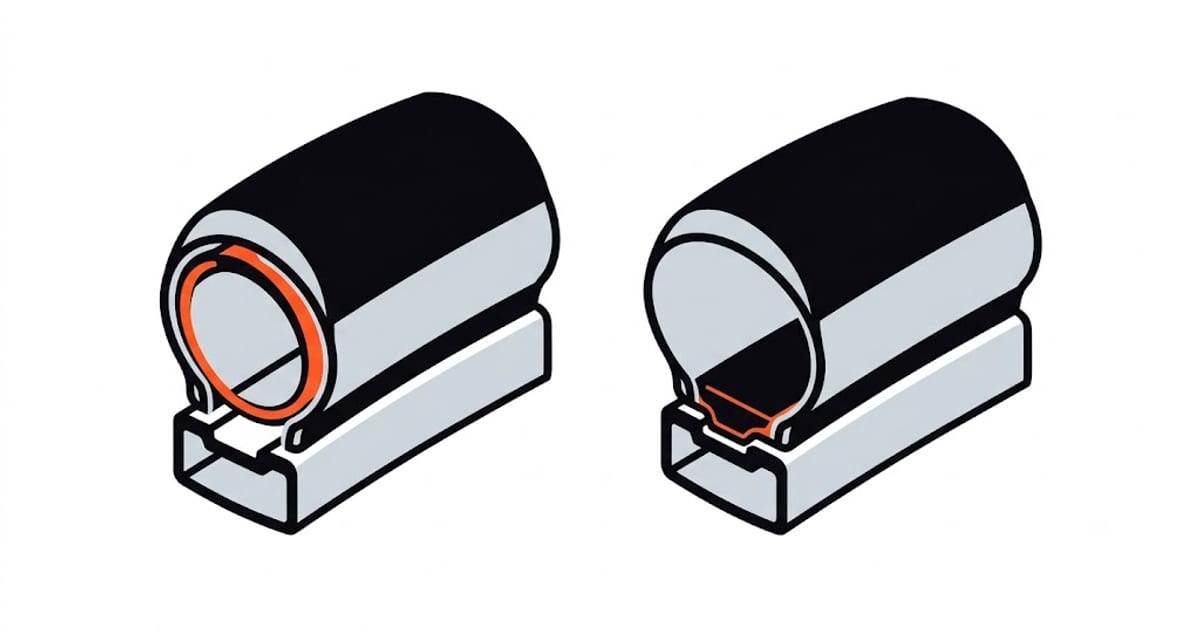 Tubeless Tire Pressure: What Actually Changes When the Tube Comes Out
The common advice is "run 10 psi less tubeless". That is roughly right for the wrong reason, and the reason matters when you decide how far to go.
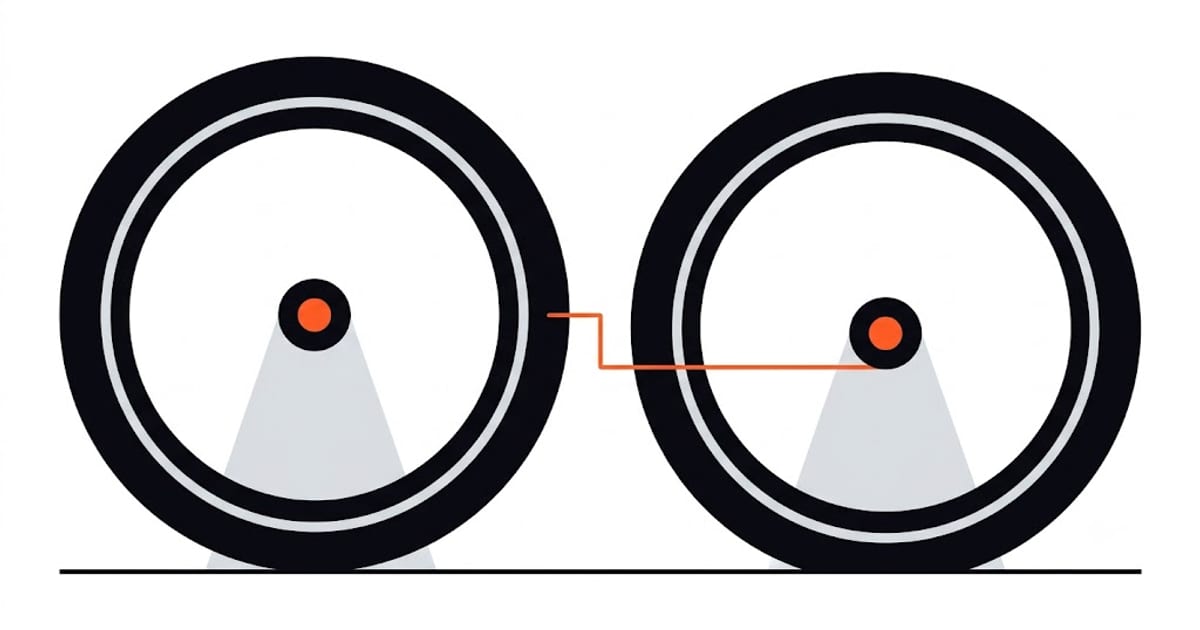 Bike Tire Pressure by Rider Weight: The Chart, and the Maths Behind It
The pressure written on your tire is a limit, not a recommendation. The number you actually want comes from wheel load and tire width, and it has been measurable since the 1990s.