
Disc brakes give almost no warning before they stop working well, and the two consumable parts have specific numbers rather than a feel.
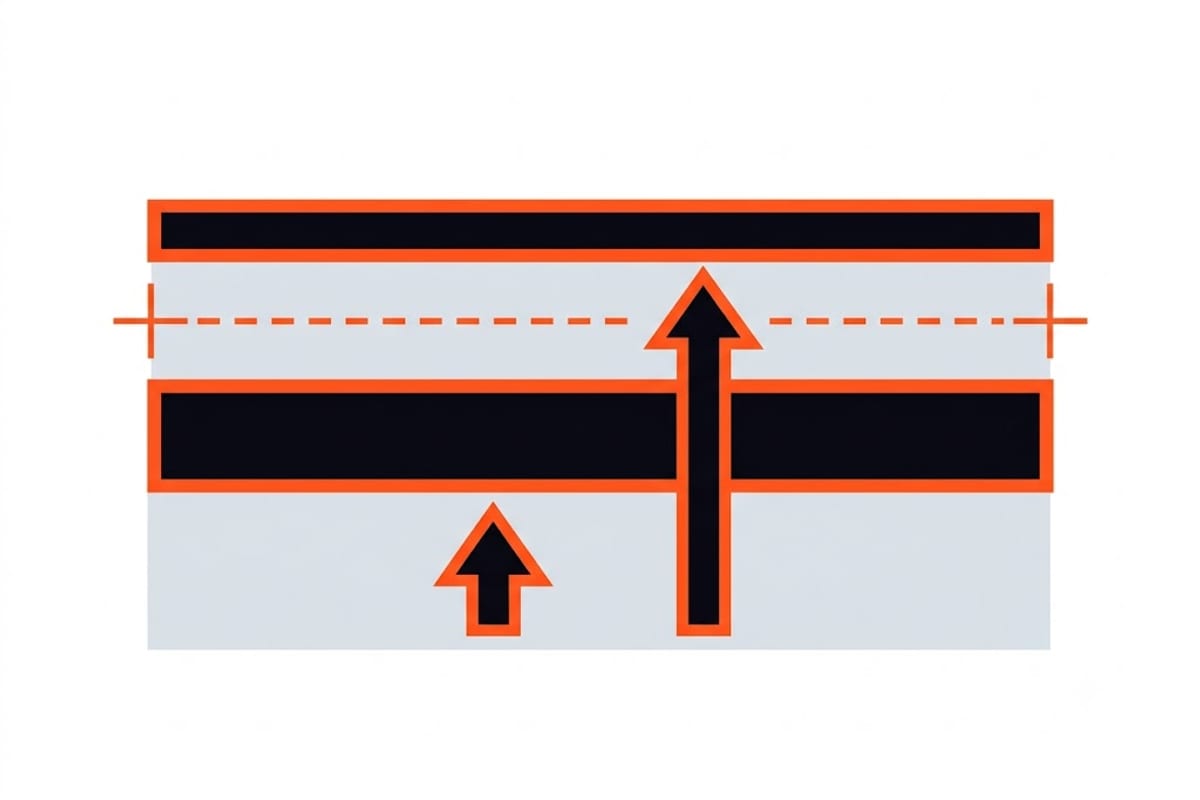
Pads
A new pad has roughly 3 to 4 mm of total thickness including the metal backing plate, of which around 2 to 3 mm is friction material.
Replace at about 0.5 mm of remaining friction material, measured on the thinnest part. Below that, braking performance falls off sharply and the risk of reaching the backing plate on a long descent becomes real.
Metal on metal ruins the rotor in minutes, and a rotor costs several times what a set of pads costs.
Rotors
Rotors have a minimum thickness stamped on them, commonly 1.5 mm against a new thickness of 1.8 or 2.0 mm. That is a very small amount of material to lose, and it goes faster than people expect in wet and gritty conditions.
Measure with a caliper at several points around the braking track, since wear is rarely even. Below the stamped minimum the rotor should be replaced — it can crack, and it flexes enough to affect braking well before it does.
Checking without removing anything
Look through the gap in the caliper with a light. Compare the visible friction material to the thickness of the metal backing plate behind it: when the friction material is thinner than the backing, replacement is due.
On hydraulic brakes the lever feel does not warn you, because the pistons advance automatically to take up pad wear. The lever feels identical with new pads and with pads at 0.3 mm, which is precisely why this has to be inspected rather than felt.
Cable-actuated discs do give a warning — the lever travel increases — but by then the pads are usually well worn.
Organic or metallic
Organic (resin) pads are quieter, bite well when cold, and wear faster. They also fade sooner on a long descent. Good for dry conditions and light use.
Metallic (sintered) pads last considerably longer, handle heat and wet far better, and are noisier. They also wear the rotor faster and need more heat before they work properly.
Semi-metallic sits between the two and is what most riders end up on.
The pad compound is a bigger factor in rotor life than most people realise. A season on sintered pads in wet grit removes measurably more rotor than the same season on organic.
Bedding in new pads
New pads do not work properly until the compound has transferred a thin layer onto the rotor. Skipping this leaves brakes that feel weak and that squeal.
The standard procedure is roughly twenty moderate stops from speed, braking firmly without coming to a complete stop, allowing a moment between each. Then a few harder ones. Do it on a quiet road before relying on the brakes.
Always bed new pads to a new or freshly cleaned rotor. Pads bedded to one rotor and moved to another perform poorly until they re-bed.
Contamination is not repairable
Oil, chain lube, brake fluid or degreaser on a pad soaks into the friction material and does not come out. Sanding the surface removes the contaminated layer and the material underneath is contaminated too.
The symptoms are dramatic loss of power and a loud howl. The fix is new pads, and cleaning the rotor thoroughly with isopropyl alcohol before fitting them.
The practical consequence: never spray lubricant or degreaser near a disc brake, and cover the rotor when working on the drivetrain.
Noise, and what each kind means
A squeal under light braking that goes away when you brake harder is usually vibration rather than a fault, and it is more common with sintered pads and thin rotors. Cleaning the rotor with isopropyl alcohol and re-bedding often settles it.
A constant grinding is either contamination or the backing plate reaching the rotor. Stop riding and look.
A rhythmic rubbing that comes and goes once per wheel revolution is a bent rotor, not a pad problem. A rotor can be trued with a dedicated tool, and a badly bent one should be replaced.
A howl that appeared suddenly and is much louder than before, with weak braking, is contamination until proven otherwise.
Keeping a spare set
Pads are small, cheap, and specific to the caliper. A set that fits your bike is worth carrying on any long ride in wet or gritty conditions, because pad wear in those conditions is measured in a single long descent rather than in months.