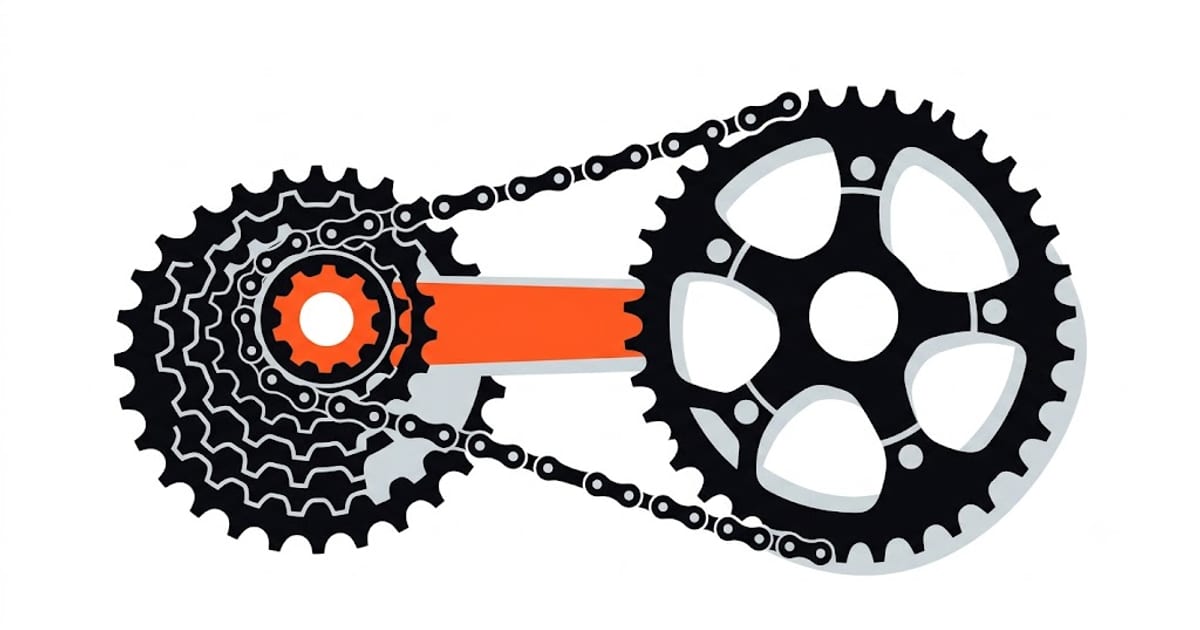
Four common ways to express a gear. They are not interchangeable, and only the last one lets you compare bikes with different cranks.
Gear ratio
gear ratio = chainring teeth ÷ sprocket teeth
A 50 T ring on an 11 T sprocket is 4.55. The wheel turns 4.55 times per pedal revolution.
Simple, and it ignores wheel size entirely — so it cannot compare a road bike to a mountain bike.
Gear inches
gear inches = gear ratio × wheel diameter in inches
That 4.55 on a 700c wheel (about 26.3 in with tyre) gives 120 gear inches. It describes the diameter a penny-farthing wheel would need to be geared the same.
Now wheel size is included. Crank length still is not.
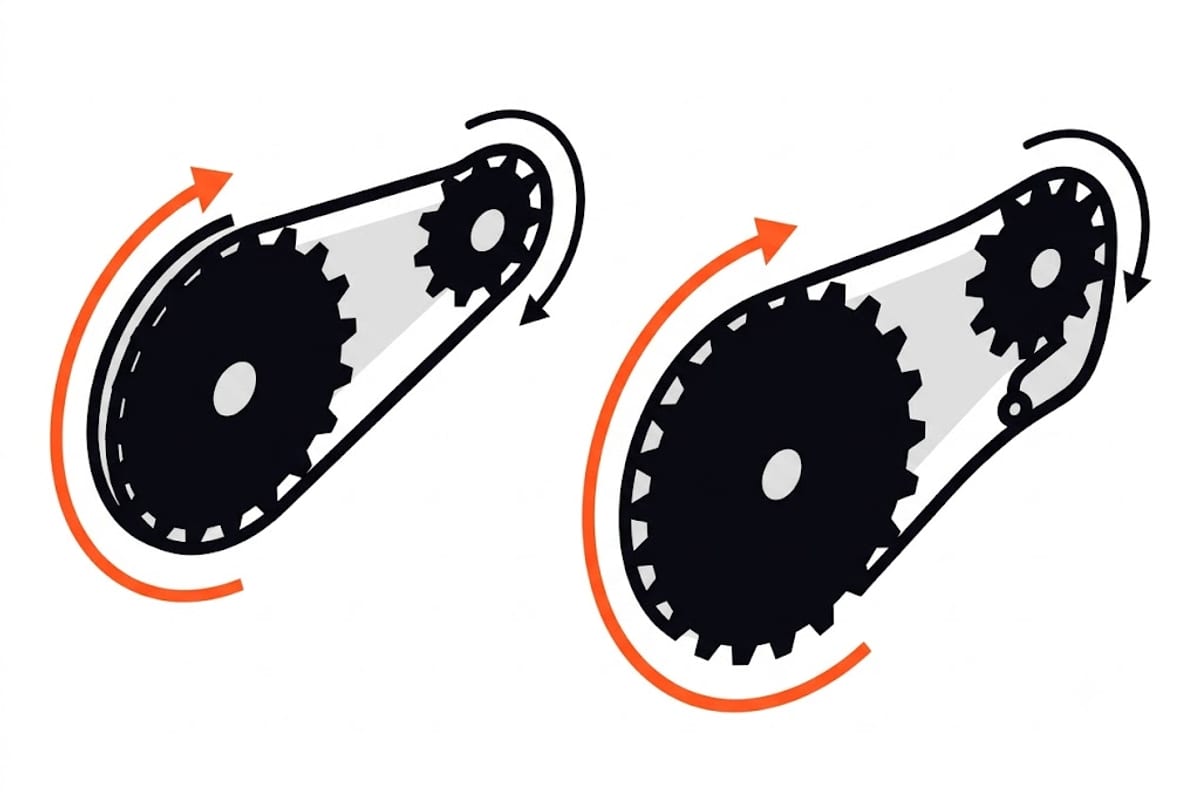
Development
development = gear ratio × wheel circumference
Metres travelled per pedal revolution. Intuitive — a 7 m gear moves you 7 m per turn of the cranks — and common in Europe. Same blind spot as gear inches.
Gain ratio, and why it is the right one
gain ratio = (wheel radius ÷ crank length) × gear ratio
This is the only one that includes crank length, and crank length matters because the crank is the lever you apply force through. A longer crank multiplies your force more, so the same gear feels easier.
Gain ratio is dimensionless: it tells you how far the bike travels for a given distance your foot travels. That makes it the only figure that honestly compares two bikes with different wheels and different cranks.
The practical case: 165 mm cranks against 175 mm is a 6% difference in leverage. Compare two bikes on gear inches and that 6% is invisible, even though your legs feel it on every climb.
What the numbers mean in use
Rough gain ratios for a road bike:
| Gain ratio | Use |
|---|---|
| 2.0 and below | steep climbing |
| 2.5–3.5 | rolling terrain, most riding |
| 4.0–5.0 | flat, fast |
| 6.0+ | descending, sprinting |
The number that decides whether a bike is pleasant on hills is the lowest gear, not the highest. Almost nobody runs out of top gear on a climb; plenty of people run out of bottom.
Range and steps
Two properties matter beyond the extremes.
Range is the highest gear divided by the lowest. A wide range covers more terrain.
Step size is the jump between adjacent gears. Wide range with few sprockets means big jumps, and a big jump means the cadence you want sits between two gears.
This is the entire trade behind 1× drivetrains: dropping the front derailleur simplifies everything and costs you either range or step size. A 10–52 cassette has huge range and correspondingly coarse steps in the middle, where you spend most of your time.
Compatibility for any of it is in drivetrain compatibility.
FAQ
How do I calculate bike gear ratio?
Divide chainring teeth by sprocket teeth. A 50 T ring on an 11 T sprocket is 4.55.
What are gear inches?
Gear ratio multiplied by wheel diameter in inches — the equivalent penny-farthing wheel diameter. It accounts for wheel size but not crank length.
What is gain ratio?
Wheel radius divided by crank length, multiplied by gear ratio. It is the only measure accounting for crank length, and the only fair way to compare two different bikes.
Does crank length affect gearing?
Yes. A longer crank gives more leverage, so the same gear feels easier. 165 mm against 175 mm is about 6%.
What gear ratio is good for climbing?
A gain ratio around 2.0 or below. What matters for hills is the lowest gear available, not the highest.