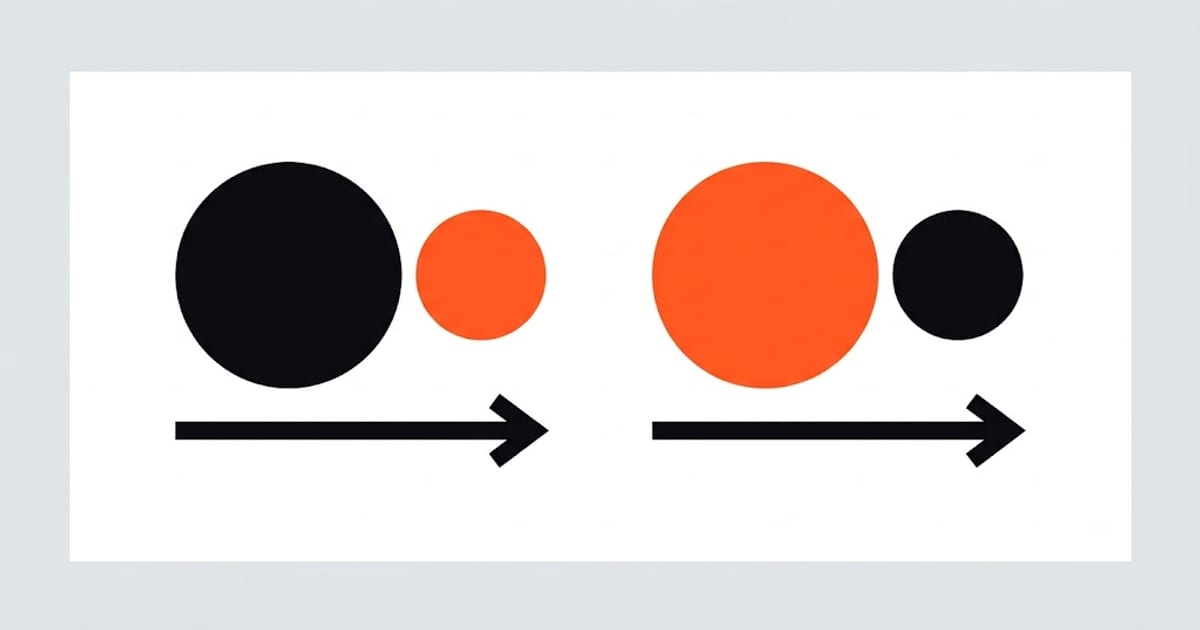
A gear ratio on its own — 34 front, 28 rear, so 1.21 — does not describe how the bike will feel, because it ignores the wheel. The same ratio on a 700c road wheel and a 26-inch mountain wheel produces different speeds at the same cadence.
Two conventions fix this.
Gear inches
gear inches = (chainring ÷ sprocket) × wheel diameter in inches
The result is the diameter a direct-drive wheel would need to be to give the same gear — a leftover from penny-farthings, and still the most-used unit in English-speaking cycling.
A 34 × 28 on a 700c wheel of about 26.3 inches gives roughly 32 gear inches. Anything under about 30 is a genuinely low climbing gear; the low 20s is touring or loaded gearing.
Development, or metres per revolution
development = gear inches × π ÷ 39.37 (metres)
How far the bike moves for one full turn of the cranks. More intuitive than gear inches for most people and standard in continental Europe.
Roughly 2.5 metres is a low gear; 8 to 9 metres is a high one.
Why they matter more than ratios
Comparing bikes with different wheels. A gravel bike on 650b and a road bike on 700c with identical cassettes are not geared the same. Gear inches makes them directly comparable; the ratio does not.
Comparing 1x with 2x. A 1x system has one chainring and a wide cassette; a 2x has two rings and a narrower one. Listing ratios tells you nothing about whether the ranges overlap. Converting both to gear inches shows immediately where each system is low, where it is high, and how big the steps are.
Judging the size of a step. The jump between two adjacent gears matters for holding a cadence, and it is easier to judge in gear inches than in ratios. A jump from 60 to 66 gear inches is a 10% step, which is at the edge of noticeable; a jump from 30 to 36 is 20% and is very noticeable on a climb.
Speed at a cadence
Multiply development by cadence to get speed. At 90 rpm:
| Development | Speed |
|---|---|
| 3 m | 16 km/h |
| 5 m | 27 km/h |
| 7 m | 38 km/h |
| 9 m | 49 km/h |
This is the arithmetic behind whether a given lowest gear is low enough. If you want to hold 70 rpm at 8 km/h on a steep climb, that requires about 1.9 metres of development — and the question becomes whether the drivetrain can produce it.
The tyre affects the answer
Wheel diameter in both formulas is the rolling diameter with the tyre fitted, not the rim size. A 700c rim with a 25 mm tyre and the same rim with a 45 mm gravel tyre differ by roughly an inch and a half in diameter, which is about 3% in every gear.
That is small but not nothing. It is the reason a bike feels slightly harder to spin up after fitting larger tyres, independently of the extra weight and rolling resistance.
Choosing a range
The useful question is not "what ratios does it have" but "what is the lowest gear, what is the highest, and how big are the steps."
Low gear decides whether the steepest climb on your routes is rideable seated. High gear decides whether you spin out on a descent, which most riders care about far less. Step size decides whether you can hold a comfortable cadence on rolling terrain.
Convert any two candidate setups to gear inches and those three questions answer themselves.