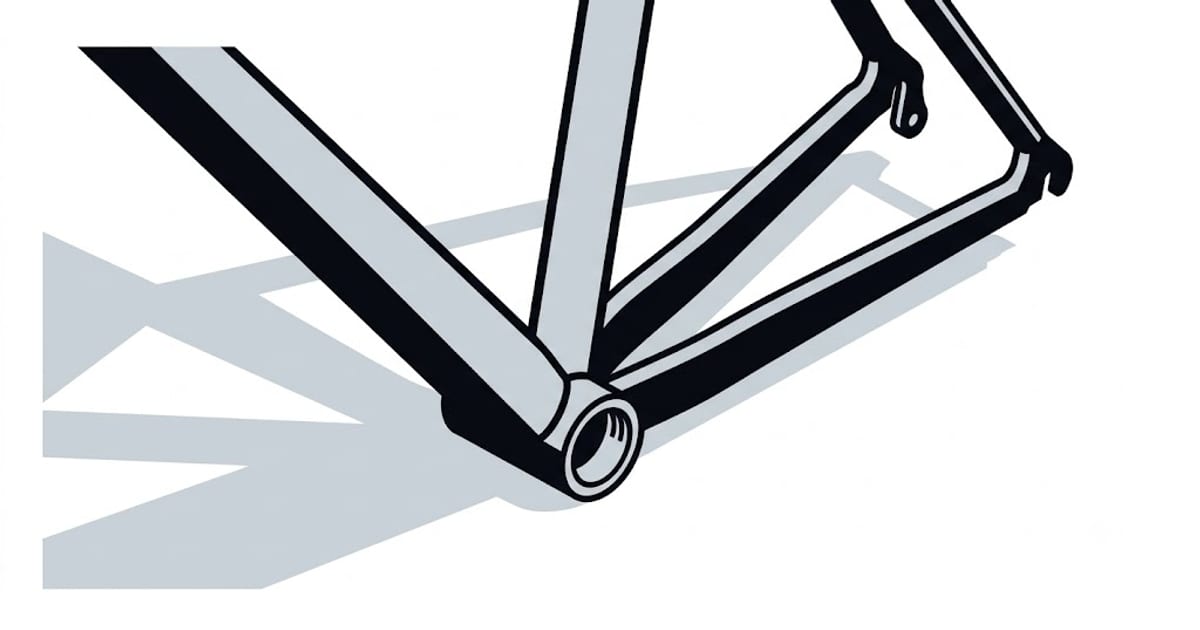
The names are numerous and unhelpful. What actually determines whether parts fit is three measurements:
- Shell width — how wide the frame's bottom bracket shell is.
- Shell inner diameter — threaded or pressed, and how big.
- Spindle diameter — the axle passing through, set by the crankset.
Every standard is a named combination of those three. Get all three and compatibility answers itself.
Threaded
BSA / English — 68 mm shell (73 mm on mountain bikes), 1.37 in × 24 tpi. The long-standing default and, after a decade of press-fit experiments, increasingly the default again.
⚠️ The drive side is reverse-threaded. Turning it the intuitive way tightens it. This catches people every time and the damage is done before the mistake is noticed.
Italian — 70 mm shell, 36 mm × 24 tpi, both sides conventional thread. Mostly older Italian frames.
T47 — a modern threaded standard using a 47 mm diameter, giving press-fit's larger bearing spacing with threads. The answer to press-fit creaking.
Press-fit
Bearings press directly into the frame, no threads.
| Standard | Shell width | Bore |
|---|---|---|
| BB86 / BB92 | 86.5 / 91.5 mm | 41 mm |
| BB30 | 68 mm | 42 mm |
| PF30 | 68 mm | 46 mm |
| BB386EVO | 86.5 mm | 46 mm |
The intent was legitimate: a larger bore allows a larger spindle, which is stiffer and lighter, and removing threads saves a machining step.
Why press-fit creaks
Press-fit tolerances are tight, and a frame shell out by a fraction of a millimetre gives a bearing that is either loose or distorted. Either way it creaks — and a creak that appears under pedalling load is diagnosed as everything else first, because it sounds like it comes from the whole frame.
Threaded shells are more forgiving because the threads locate the cups positively.
Fixes when it happens: bearing retaining compound, a thread-together press-fit bottom bracket that clamps the two cups to each other rather than relying on the frame, or having the shell faced and reamed.
Spindle diameters
The crankset decides this:
- 24 mm — Shimano and most Hollowtech II compatible cranks.
- 28.99 mm — SRAM DUB.
- 30 mm — BB30 and many aftermarket cranks.
- 24/22 mm stepped — SRAM GXP.
A 24 mm spindle in a 30 mm bore works fine with an adapter bottom bracket. The reverse — a 30 mm spindle into a narrow shell — usually does not.
Working it out
- Measure the shell width with calipers.
- Threaded or press-fit? Look for threads.
- Measure the inner diameter.
- Check the crank's spindle diameter from its specification.
- Buy the bottom bracket matching all four.
Adapters exist for most awkward combinations, which is why a crankset rarely rules out a frame outright. Related compatibility questions are in drivetrain compatibility.
FAQ
How do I know what bottom bracket I need?
Measure shell width and inner diameter, note whether it is threaded, and check your crankset's spindle diameter. Those four figures identify it.
Which way does a bottom bracket unthread?
On BSA/English, the drive side is reverse-threaded — turn it clockwise to remove. The non-drive side is conventional.
Why does my press-fit bottom bracket creak?
Tolerance between bearing and frame shell. A thread-together bottom bracket, retaining compound, or having the shell faced and reamed usually resolves it.
Can I use a Shimano crank in a BB30 frame?
Yes, with an adapter bottom bracket that reduces the 42 mm bore to a 24 mm spindle.
Is threaded better than press-fit?
More forgiving of manufacturing tolerance and less prone to creaking. T47 offers threaded reliability with press-fit's larger bearing spacing.